Creative learning at home without a lesson plan
Children learn through noticing, trying, explaining, and changing their minds. Parents can support that process with ordinary materials and a few good questions—without turning home into a second classroom.
Begin with a material, not an objective
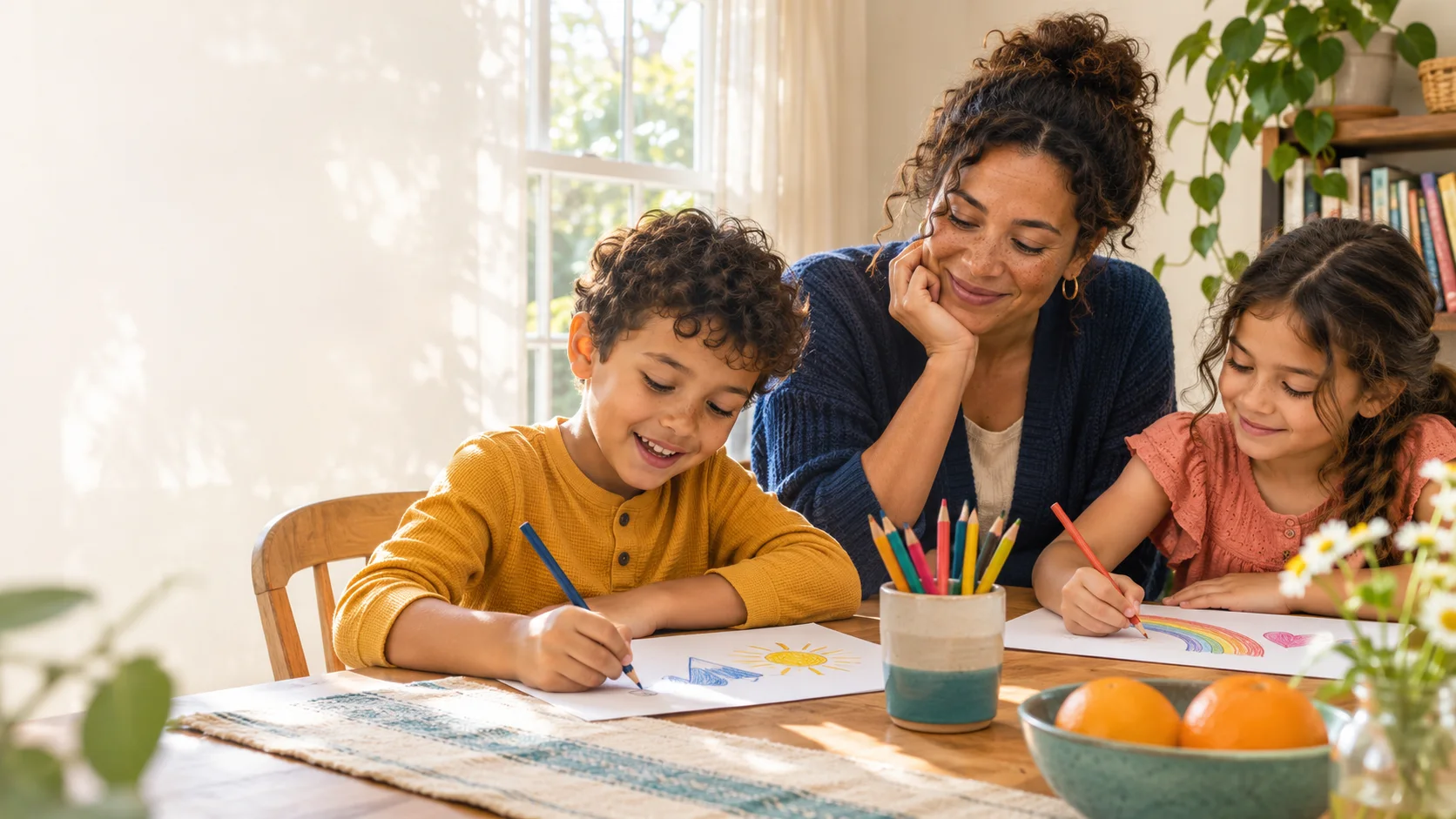
Put out paper, tape, blocks, crayons, a small bowl of objects, or a book. Start with what is available and let the child show you what the material can become. The open beginning creates room for planning, fine-motor practice, language, and persistence at once.
Use questions that keep the child in charge
- What do you notice first?
- What could we try next?
- What changed when you moved that?
- How could you show someone else your idea?
Ask one question, then wait. The pause matters. Children often need time to form an answer, especially when the adult is genuinely interested rather than checking for a correct response.
Three easy activity frames
Make a pattern
Choose two or three colors, shapes, sounds, or objects and create a repeating sequence. Invite your child to predict what comes next, then change one part and see what happens.
Tell the picture
Use a drawing or coloring page as the beginning of a story. Who is here? What happened before? What might happen next? Accept invented details; storytelling is a place to practice flexible thinking.
Design a solution
Ask your child to make a bridge for a toy, a cozy space for a stuffed animal, or a sign for an imaginary shop. Let the first attempt be imperfect. The redesign is where much of the learning happens.
Keep the adult role light: provide materials, notice effort, ask a useful question, and resist taking over when the child is still working it out.
Make it sustainable
Store a small set of materials together so starting is easy. Keep finished work visible for a day, then photograph or recycle it without turning every creation into a keepsake. A sustainable creative habit is better than a spectacular activity that exhausts everyone.
Let learning stay joyful
You do not need to extract a lesson from every drawing. Sometimes the value is concentration, expression, or shared time. When children experience learning as something they can enter with curiosity, they are more likely to return to it.
More ideas for your week
Visit the parent blog for calm routines, creative prompts, and practical support.
Back to the parent blog